Normal PSA Levels by Age: Chart for Men and When to Worry
Normal PSA levels rise with age. With age specific ranges, a normal PSA is up to 2.5 ng/mL for men in their 40s, up to 3.5 ng/mL in their 50s, up to 4.5 ng/mL in their 60s, and up to 6.5 ng/mL in their 70s. Many doctors still use 4.0 ng/mL as a general cutoff. A PSA above the normal range for your age, a level above 10 ng/mL, or a PSA that rises more than 0.75 ng/mL in one year deserves a closer look. A high PSA does not always mean cancer. An enlarged prostate, infection, or recent ejaculation can also raise it. Your provider reads your result with your age, family history, and past PSA levels.
What Is a PSA Test and What Does It Measure?
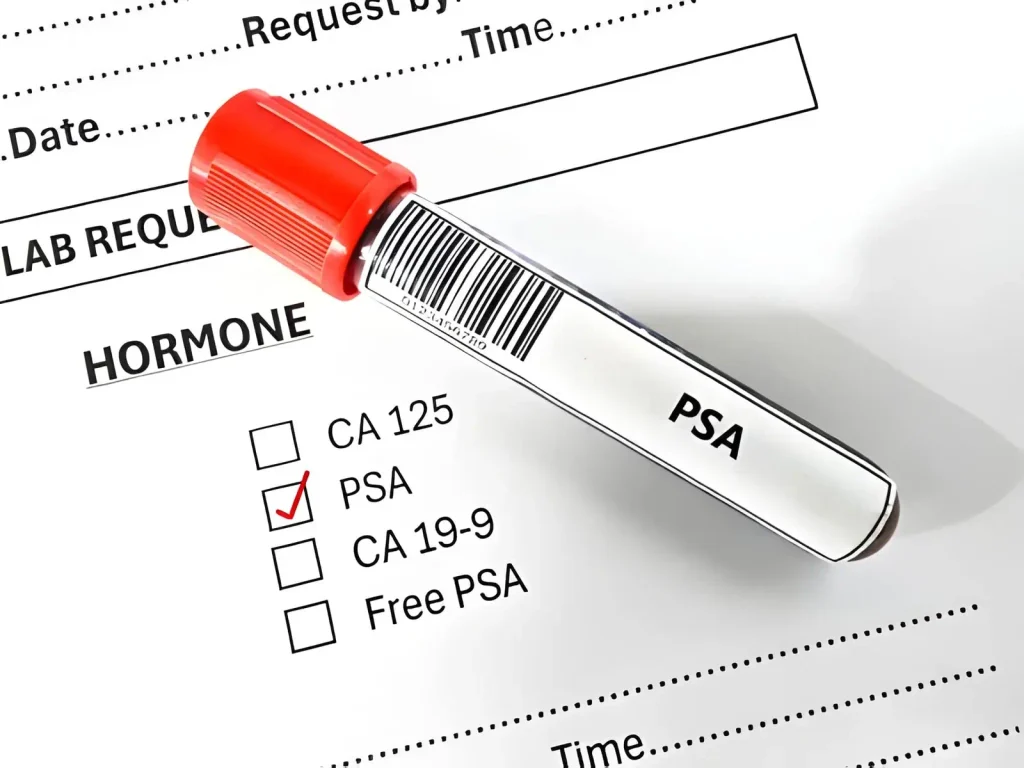
A PSA test does not diagnose cancer on its own. It shows how much PSA is in your blood, and many harmless conditions can raise that number. Early prostate cancer usually causes no symptoms, so the PSA test is often the first clue. Your doctor reads your result together with your age, family history, and past PSA levels. A prostate exam or other tests are often added when a result looks high.
Doctors use the PSA test mainly to screen for prostate cancer, the most common cancer in American men after skin cancer. About 1 in 8 men will be diagnosed with prostate cancer in their lifetime. Black men face a higher risk, with about 1 in 6 diagnosed, and they are about twice as likely to die from the disease.
A PSA test does not diagnose cancer on its own. It shows how much PSA is in your blood, and many harmless conditions can raise that number. Early prostate cancer usually causes no symptoms, so the PSA test is often the first clue. Your doctor reads your result together with your age, family history, and past PSA levels.
Normal PSA Levels by Age
PSA naturally rises as men get older because the prostate grows larger with age. The sections below explain what a normal PSA level looks like for men in their 40s, 50s, 60s, and 70s and older.
1. Normal PSA Levels for Men in Their 40s
For men ages 40 to 49, a normal PSA is up to about 2.5 ng/mL. Most healthy men in this age group have a PSA well below 1.0 ng/mL. A first PSA test in your 40s gives you a baseline number that makes future results easier to read. Many experts suggest a baseline test between ages 45 and 50 for men at average risk.
Black men and men with a father or brother diagnosed with prostate cancer before 65 face a higher risk. For them, testing often starts between ages 40 and 45. A PSA above 1.0 ng/mL in your 40s is not a sign of cancer, but it can mean you need more frequent checks over the coming years. Your provider will set a schedule that fits your risk.
2. Normal PSA Levels for Men in Their 50s
For men ages 50 to 59, a normal PSA is up to about 3.5 ng/mL. This is the age group where prostate screening becomes most common. The prostate often starts to enlarge in the 50s, a harmless condition called benign prostatic hyperplasia, or BPH. BPH can raise PSA and cause urinary symptoms such as a weak stream or frequent trips at night.
Many men in their 50s also start to notice changes in energy, sex drive, and erections. Our guide on Normal Testosterone Levels by Age explains how testosterone changes during these years. If you take testosterone or plan to start, your provider checks your PSA first, since testosterone can raise PSA in some men. Regular checks keep treatment safe over time.
3. Normal PSA Levels for Men in Their 60s
For men ages 60 to 69, a normal PSA is up to about 4.5 ng/mL. Prostate cancer is diagnosed most often in men ages 65 to 74, so regular PSA checks matter more in this age group. An enlarged prostate is also very common, which means a mildly high PSA often comes from BPH rather than cancer. Your provider looks at your full history before drawing any conclusion from one number.
The U.S. Preventive Services Task Force advises that men ages 55 to 69 make a personal decision about PSA screening with their provider. PSA screening can find cancer early, but it can also find slow growing cancers that would never cause harm. Your provider can help you weigh the benefits and risks based on your health and family history.
4. Normal PSA Levels for Men 70 and Older
For men 70 and older, a normal PSA is up to about 6.5 ng/mL. The prostate keeps growing with age, so a higher PSA is expected. Many prostate cancers found after 70 grow so slowly that they never cause symptoms. For this reason, routine screening is usually not advised after 70 for men without symptoms. Treatment for these slow cancers can cause more harm than the cancer itself.
Men over 70 who are in very good health, or who have a strong family history, can still choose to keep testing after talking with their provider. Urinary problems, bone pain, or blood in the urine or semen should always be checked at any age. These signs more often point to BPH or infection, but they still need a prompt visit with your provider.
Take The First Step
Your health and wellness goals deserve expert attention. Our board-certified team is here to listen, evaluate, and build a care plan tailored to your unique needs. Whether you’re exploring your options or ready to get started, the next step is simple.
PSA Levels by Age Chart for Men
This chart shows age specific normal PSA ranges for men, based on widely used research guidelines. Many labs still use a single cutoff of 4.0 ng/mL for all ages, so your report can differ. All numbers are in ng/mL.
| Age Group | Age Specific Normal PSA | General Cutoff Many Labs Use |
|---|---|---|
| 40 to 49 | 0 to 2.5 | Below 4.0 |
| 50 to 59 | 0 to 3.5 | Below 4.0 |
| 60 to 69 | 0 to 4.5 | Below 4.0 |
| 70 and older | 0 to 6.5 | Below 4.0 |
When to Worry About Your PSA Level?
A high PSA is a reason to look closer, not a reason to panic. The sections below explain which PSA levels need follow up and why the change in your PSA over time matters as much as a single number.
1. PSA Levels That Need a Closer Look
A PSA between 4 and 10 ng/mL is often called the gray zone. About 1 in 4 men with a PSA in this range has prostate cancer, while the rest usually have BPH or inflammation. A PSA above 10 ng/mL raises the chance of cancer to more than 50 percent. A PSA above the normal range for your age also deserves follow up.
A free PSA test helps sort out a gray zone result. It measures how much PSA floats freely in the blood. A free PSA below 10 percent points to a higher risk of cancer, while a result above 25 percent points to a lower risk. Your provider can also order a prostate MRI before deciding if a biopsy is needed.
2. A Rising PSA Over Time
The change in your PSA over time, called PSA velocity, can matter as much as one result. A rise of more than 0.75 ng/mL in one year is a common warning sign, even when your total PSA still looks normal. This is why keeping a record of every PSA test helps your provider spot trends early.
One high result is not enough to make a decision. Doctors usually repeat the test in six to eight weeks to confirm it, since PSA can rise for a short time from harmless causes. If the repeat result stays high or keeps rising, your provider will often refer you to a urologist for further tests. These can include a free PSA test, a prostate MRI, or a biopsy.
What Can Raise or Lower Your PSA?
Several harmless factors can raise PSA for a short time. Ejaculation within 48 hours of the test can raise it, so avoid sex for two days before your blood draw. Long bike rides, a recent prostate exam, a urinary catheter, or a urinary tract infection can also push PSA higher. Prostatitis, an inflamed prostate, can raise PSA for weeks.
Some medicines lower PSA. Finasteride and dutasteride, often used for an enlarged prostate or hair loss, cut PSA by about half. Doctors usually double the result to read it correctly. Tell your provider about every medicine you take before testing. Obesity can also lower PSA slightly by diluting it in a larger blood volume, which can hide a rising level.
Testosterone therapy can raise PSA in some men, which is why PSA is checked before starting treatment and again within the first year. Our post on Testosterone Replacement Therapy explains how monitoring works during treatment. Prostate surgery and radiation can also affect sexual health, and our guide on Erectile Dysfunction Causes explains the link between prostate health and erections.
When Should Men Get a PSA Test?
Most guidelines suggest that men at average risk talk with their provider about PSA screening starting between ages 50 and 55. Men at higher risk, including Black men and men with a father or brother diagnosed before 65, should start the conversation at 40 to 45. Men with BRCA gene changes also face a higher risk and often start earlier. If your PSA is below 1.0 ng/mL, testing every two to four years is often enough. Higher results usually need yearly checks, and a rising trend can call for sooner follow up. A PSA test can be added to routine bloodwork during your yearly checkup, and our Annual Physical Exam Complete Guide explains what other screenings men need at each age.
At Prime Healthcare of Cypress, we help you decide if PSA screening is right for you, review your results, and explain what your numbers mean in plain language. Our men’s health services in Cypress include preventive screenings and low testosterone evaluations. PSA tests fit easily into annual physical exams in Cypress, and telemedicine in Cypress makes results reviews simple.
Frequently Asked Questions
Take The First Step
Your health and wellness goals deserve expert attention. Our board-certified team is here to listen, evaluate, and build a care plan tailored to your unique needs. Whether you’re exploring your options or ready to get started, the next step is simple.