Normal TSH Levels by Age: Chart for Adults and Pregnancy
A normal TSH level for most adults is about 0.4 to 4.0 mIU/L. TSH naturally rises with age, so the upper limit climbs to about 4.5 mIU/L in adults 51 to 70, about 5.9 mIU/L in adults in their 70s, and up to about 7.5 mIU/L after 80. In pregnancy, TSH runs lower, with commonly used ranges of about 0.1 to 2.5 mIU/L in the first trimester and 0.2 to 3.0 mIU/L in the second and third. A high TSH usually means an underactive thyroid, while a low TSH usually means an overactive thyroid. Always compare your result with the range printed on your own lab report.
What Is TSH and Why Does It Matter?
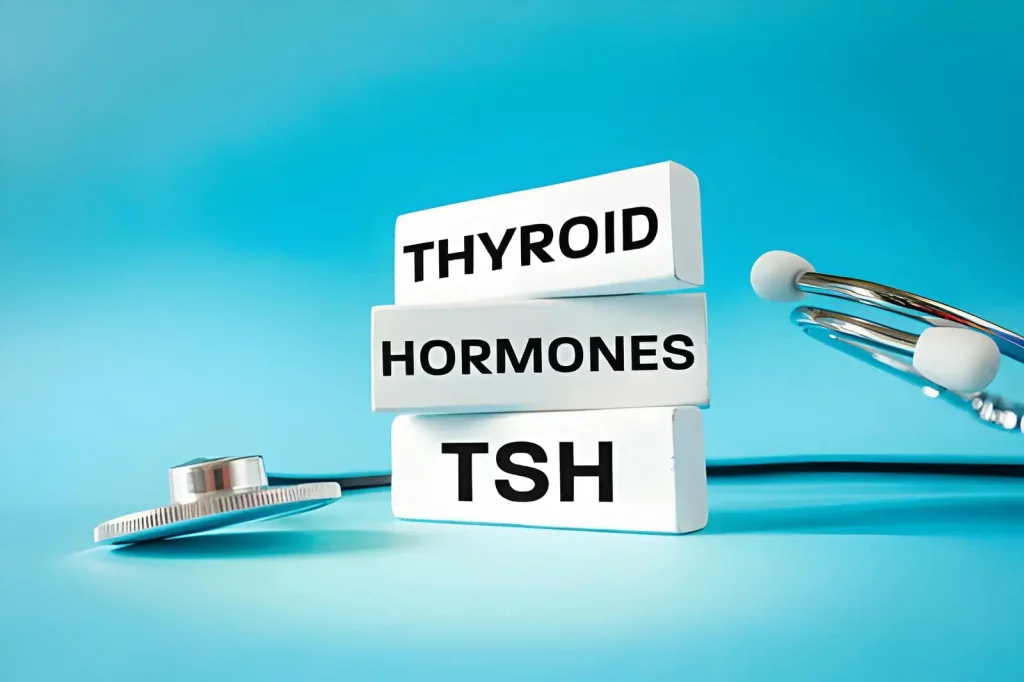
TSH stands for thyroid stimulating hormone. It is made by the pituitary gland, a small gland at the base of your brain. TSH tells your thyroid gland how much thyroid hormone to release. Thyroid hormone controls your metabolism, heart rate, body temperature, energy, weight, and mood, so even small changes in TSH can affect how you feel every day.
TSH works like a thermostat. When thyroid hormone levels drop, your pituitary makes more TSH to push the thyroid harder, so TSH goes up. When thyroid hormone levels run too high, your pituitary makes less TSH, so TSH goes down. That is why a high TSH points to an underactive thyroid, and a low TSH points to an overactive thyroid.
TSH is the most sensitive and most common thyroid blood test. It often changes before other thyroid hormones move out of range, so doctors use it as the first screening test. If your TSH is abnormal, your doctor usually adds free T4 or other tests. Our guide on Thyroid Function Test explains each marker in the full thyroid panel.
Normal TSH Levels by Age
TSH is highest in newborns, settles during childhood, and then slowly rises again as adults get older. The sections below explain what a normal TSH level looks like for children, younger adults, middle aged adults, and older adults.
1. Normal TSH Levels for Children and Teens
Newborns have a sharp rise in TSH right after birth, with levels that can reach 20 mIU/L or higher in the first few days. Every baby in the United States gets a newborn screening blood test, usually 24 to 48 hours after birth, which checks for congenital hypothyroidism. This condition affects about 1 in 2,000 to 4,000 babies and is easy to treat when found early.
TSH falls quickly after the first weeks of life. Many labs use a normal range of about 1.7 to 9.1 mIU/L for babies 2 to 20 weeks old, and about 0.7 to 6.4 mIU/L for children and teens up to age 20. Our post on the Well Child Visit Schedule explains which screenings and checkups your child needs at each age.
2. Normal TSH Levels for Adults Ages 18 to 50
For adults ages 18 to 50, a normal TSH is about 0.4 to 4.0 mIU/L, and some labs use an upper limit of 4.5 mIU/L. Most healthy adults in this age group have a TSH between 1.0 and 2.5 mIU/L. A result near the top of the range is not always a problem, but it is worth checking again if you have symptoms.
Women in this age group are five to eight times more likely than men to develop thyroid problems, even though men and women share the same normal range. Fatigue, weight gain, feeling cold, and heavy periods are common early signs of a high TSH. Our guide on Hypothyroidism Symptoms in Women explains these signs and when to ask for a TSH test.
3. Normal TSH Levels for Adults Ages 51 to 70
TSH slowly rises with age, even in people with a healthy thyroid. For adults ages 51 to 70, a normal TSH is about 0.5 to 4.5 mIU/L. Thyroid problems also become more common in this age group, especially Hashimoto’s thyroiditis in women. A TSH that slowly climbs over several years is a pattern your doctor will watch closely.
Women going through menopause often confuse thyroid symptoms with menopause symptoms, since both can cause fatigue, weight gain, poor sleep, and mood changes. A simple TSH blood test helps tell them apart, so you get the right treatment for the right cause. Our post on Hormone Replacement Therapy for Women explains menopause treatment options once a thyroid problem has been ruled out.
4. Normal TSH Levels for Adults Over 70
TSH keeps rising in older adults with healthy thyroids. Large national studies show that the upper limit of normal reaches about 5.9 mIU/L for adults in their 70s and about 7.5 mIU/L for adults 80 and older. A TSH of 5 or 6 mIU/L can be normal at this age, even though it would be flagged as high on a standard lab report.
Doctors often avoid treating a mildly high TSH in older adults when free T4 is normal and there are no clear symptoms. Too much thyroid medicine in older adults can raise the risk of atrial fibrillation, bone loss, and fractures. Most guidelines suggest treatment for adults over 70 only when TSH stays above 10 mIU/L or symptoms are clear.
Take The First Step
Your health and wellness goals deserve expert attention. Our board-certified team is here to listen, evaluate, and build a care plan tailored to your unique needs. Whether you’re exploring your options or ready to get started, the next step is simple.
Normal TSH Levels by Age Chart
This chart shows normal TSH ranges by age group and during pregnancy. Ranges are based on large national studies and American Thyroid Association guidance, and they vary slightly from lab to lab. All numbers are in mIU/L.
| Age Group or Stage | Normal TSH Range |
|---|---|
| Newborns (first few days) | Can rise to 20 or higher, then falls quickly |
| Babies (2 to 20 weeks) | 1.7 to 9.1 |
| Children and teens (5 months to 20 years) | 0.7 to 6.4 |
| Adults (18 to 50 years) | 0.4 to 4.0 |
| Adults (51 to 70 years) | 0.5 to 4.5 |
| Adults (71 to 79 years) | Up to about 5.9 |
| Adults (80 years and older) | Up to about 7.5 |
| Pregnancy, first trimester | 0.1 to 2.5 |
| Pregnancy, second trimester | 0.2 to 3.0 |
| Pregnancy, third trimester | 0.3 to 3.0 |
Normal TSH Levels During Pregnancy
Pregnancy changes thyroid hormone levels more than any other life stage. The sections below explain normal TSH levels in each trimester and how women with thyroid conditions can plan for a healthy pregnancy.
1. TSH Levels by Trimester
In the first trimester, a pregnancy hormone called hCG acts like TSH and pushes the thyroid to make more hormone. This lowers TSH. Commonly used ranges are about 0.1 to 2.5 mIU/L in the first trimester, 0.2 to 3.0 mIU/L in the second, and 0.3 to 3.0 mIU/L in the third. Your baby depends on your thyroid hormone until about 12 weeks of pregnancy.
Since 2017, the American Thyroid Association advises using trimester specific ranges from your own lab. When those are not available, an upper limit of about 4.0 mIU/L is often used. Untreated high TSH during pregnancy raises the risk of miscarriage, preterm birth, high blood pressure, and problems with the baby’s brain development. Early testing helps protect both mother and baby.
2. How to Plan a Pregnancy With a Thyroid Condition?
Women who already take levothyroxine usually need a higher dose as soon as pregnancy is confirmed. Many doctors advise taking two extra doses each week, which raises the weekly dose by about 30 percent, until a blood test can guide the change. TSH is usually checked every four weeks through the middle of pregnancy, then at least once later on.
Many doctors aim for a TSH below 2.5 mIU/L before conception in women who take thyroid medicine. After delivery, most women return to their usual dose. About 5 to 10 percent of women develop postpartum thyroiditis in the first year after birth, which can cause swings in TSH. Our women’s health services in Cypress include thyroid checks before, during, and after pregnancy.
What High and Low TSH Levels Mean?
A TSH outside the normal range for your age does not always mean you need treatment. The sections below explain what a high TSH and a low TSH usually mean and how doctors decide on next steps.
1. High TSH Levels (Underactive Thyroid)
A high TSH usually means your thyroid is underactive, a condition called hypothyroidism. If your TSH is high and your free T4 is low, you have overt hypothyroidism. If your TSH is between about 4.5 and 10 mIU/L and your free T4 is normal, you have subclinical hypothyroidism, a mild form that often causes few or no symptoms. Hashimoto’s thyroiditis is the most common cause.
Symptoms of high TSH include fatigue, weight gain, feeling cold, constipation, dry skin, hair loss, and low mood. Our post on Can Thyroid Problems Cause Weight Gain explains how an underactive thyroid affects weight. Treatment with daily levothyroxine is usually advised when TSH stays above 10 mIU/L, or when a lower high TSH comes with clear symptoms.
2. Low TSH Levels (Overactive Thyroid)
A low TSH usually means your thyroid is overactive, a condition called hyperthyroidism. A TSH below 0.4 mIU/L with a high free T4 or T3 points to overt hyperthyroidism. A low TSH with normal free T4 and T3 is called subclinical hyperthyroidism. Common causes include Graves’ disease, thyroid nodules, thyroiditis, and too much thyroid medicine, which is common when a dose is not rechecked.
Symptoms of low TSH include a fast or pounding heartbeat, anxiety, shaky hands, weight loss, heat intolerance, and trouble sleeping. Our guide on Normal Resting Heart Rate by Age for Adults and Children explains when a fast heart rate needs a checkup. A TSH below 0.1 mIU/L is linked to a higher risk of atrial fibrillation and bone loss, especially in older adults.
When to Get Your TSH Checked?
Ask your provider for a TSH test if you have fatigue, weight changes, hair loss, feeling cold or hot, a fast or slow heartbeat, mood changes, or irregular periods. A TSH test is also advised if you have a family history of thyroid disease, type 1 diabetes, celiac disease, or another autoimmune condition. Women who are pregnant or planning a pregnancy should also be tested.
If you take thyroid medicine, your doctor usually rechecks TSH 6 to 8 weeks after any dose change, then every 6 to 12 months once your level is stable. Older adults and people taking medicines such as amiodarone or lithium often need regular checks. A TSH test can also be added to routine bloodwork during your yearly checkup with no extra visit.
At Prime Healthcare of Cypress, we check your TSH, compare it with the right range for your age, and explain each result in plain language. TSH tests are easy to add during annual physical exams in Cypress. Our chronic disease management in Cypress covers long term thyroid care and medication changes, and telemedicine in Cypress lets you review your results from home.
What Can Affect Your TSH Results?
TSH changes during the day. It is usually highest late at night and in the early morning, and lowest in the afternoon. For this reason, many doctors suggest testing at the same time of day for each blood draw, so results are easy to compare. A single result that is slightly high or low often returns to normal on a repeat test.
Biotin supplements, found in many hair, skin, and nail products, can cause falsely high or falsely low thyroid results. Most labs advise stopping biotin for two to three days before your blood test. Steroids and dopamine can lower TSH, while amiodarone and lithium can raise it. Tell your provider about every medicine and supplement you take before testing.
A recent illness, surgery, or hospital stay can also shift TSH for several weeks, so doctors often wait to retest once you recover. Obesity can raise TSH slightly, and iodine intake from food or supplements can affect thyroid function as well. Your doctor looks at your age, symptoms, medicines, and past results together before making a diagnosis.
Frequently Asked Questions
Take The First Step
Your health and wellness goals deserve expert attention. Our board-certified team is here to listen, evaluate, and build a care plan tailored to your unique needs. Whether you’re exploring your options or ready to get started, the next step is simple.