
Thyroid Function Test: Normal Ranges and What Results Mean
A thyroid function test is a blood test that shows how well your thyroid gland is working. Most panels measure TSH and free T4, and some also include free T3. In most adult labs, a normal TSH falls between about 0.4 and 4.0 mIU/L, and a normal free T4 falls between about 0.8 and 1.8 ng/dL. A high TSH with a low free T4 usually points to an underactive thyroid. A low TSH with a high free T4 points to an overactive thyroid. Ranges vary by lab, age, and pregnancy, so your doctor reads all your numbers together before making a diagnosis.
What Is a Thyroid Function Test?
A thyroid function test is a group of blood tests that checks how much thyroid hormone your body makes and how hard your brain works to control it. The thyroid is a small gland at the front of your neck. It makes hormones that control your metabolism, heart rate, body temperature, energy, and digestion every single day. Even small changes in these hormones can affect how you feel.
The test uses a small blood sample drawn from a vein in your arm. Most results come back within one to three days. Doctors often call it a thyroid panel, and it usually starts with TSH. When TSH falls outside the normal range, many labs add free T4 or free T3 automatically, which is called reflex testing. Your provider then reviews the results with you.
Doctors order a thyroid function test to diagnose hypothyroidism, hyperthyroidism, Hashimoto’s thyroiditis, and Graves’ disease. It also helps check thyroid nodules, a goiter, and how well thyroid medicine is working. Thyroid problems are common and their symptoms are easy to miss, so this simple blood test is one of the most frequently ordered labs in primary care. It often appears on routine bloodwork during yearly checkups.
What Does a Thyroid Function Test Measure?
A full thyroid panel can include several markers, and each one tells your doctor something different. The three sections below explain TSH, the T4 and T3 hormones, and the antibody tests that find autoimmune thyroid disease.
1. TSH: The First and Most Important Thyroid Test
TSH stands for thyroid stimulating hormone. Your pituitary gland, a small gland at the base of the brain, makes TSH to tell the thyroid how much hormone to release. When thyroid hormone runs low, the pituitary makes more TSH to push the thyroid harder. When thyroid hormone runs high, the pituitary makes less TSH. This simple loop keeps hormone levels steady in healthy people.
That feedback loop makes TSH the most sensitive marker of thyroid function. It often changes before T4 or T3 move out of range. A high TSH usually means an underactive thyroid, and a low TSH usually means an overactive thyroid. For this reason, TSH is the first test doctors order for most people with suspected thyroid disease.
2. Free T4 and T3: The Hormones Your Thyroid Makes
T4, or thyroxine, is the main hormone your thyroid releases. Your body converts much of it into T3, or triiodothyronine, which is the more active form. Most T4 and T3 in your blood is bound to proteins. Only a small portion is free, and that free hormone is what enters your cells and does the work. Bound hormone stays in the blood and acts like a storage supply.
Free T4 is the most useful hormone test because blood proteins do not affect it much. Total T4 and total T3 measure both bound and free hormone, so birth control pills, pregnancy, and liver problems can change them. Free T3 or total T3 helps most when doctors suspect hyperthyroidism, since T3 often rises first.
3. Thyroid Antibody Tests for Hashimoto’s and Graves’ Disease
Antibody tests show if your immune system is attacking your thyroid. The TPO antibody test, short for thyroid peroxidase antibodies, is positive in most people with Hashimoto’s thyroiditis. Thyroglobulin antibodies can also appear with Hashimoto’s. A positive TPO result with a high TSH strongly points to autoimmune hypothyroidism, the most common type in the United States. Some people test positive years before their TSH rises.
For an overactive thyroid, doctors check TSI, short for thyroid stimulating immunoglobulin, or TRAb, the TSH receptor antibody. These antibodies cause Graves’ disease by pushing the thyroid to make too much hormone. Antibody results help your doctor find the cause of abnormal levels, predict future thyroid problems, and plan care during pregnancy.
Take The First Step
Expert aesthetic and medical care is just a click away. You deserve to look and feel your absolute best. We specialize in advanced treatments like Sculptra and Lipodissolve to help you achieve your desired results. Partner with our specialists to create a personalized care plan.
Normal Thyroid Function Test Ranges
Normal ranges for a thyroid function test vary by lab, but most adult ranges fall close to these numbers. TSH runs about 0.4 to 4.0 mIU/L. Free T4 runs about 0.8 to 1.8 ng/dL. Free T3 runs about 2.3 to 4.2 pg/mL. Total T4 runs about 5.0 to 12.0 mcg/dL, and total T3 runs about 80 to 200 ng/dL. Your report lists the exact limits your lab uses.
Always compare your numbers with the reference range printed on your own lab report. Each lab uses different equipment and sets its own limits. A TSH of 4.3 can be flagged high at one lab and normal at another. Your doctor also looks at trends over time, since one slightly abnormal result does not always mean thyroid disease. A pattern of results tells a clearer story than one number.
Age and pregnancy also shift what counts as normal. TSH naturally rises with age, so a mildly higher TSH can be normal in adults over 70. During pregnancy, TSH targets are lower, especially in the first trimester. The American Thyroid Association advises using pregnancy specific ranges when labs have them. Children and newborns have their own reference ranges too. Your provider applies the right range for your stage of life.
What Your Thyroid Function Test Results Mean?
Your doctor reads TSH and free T4 together, because the pattern matters more than any single number. A high TSH with a low free T4 means primary hypothyroidism. A high TSH with a normal free T4 means subclinical hypothyroidism, a mild form that many people never notice.
| TSH | Free T4 | Free T3 | What It Usually Means |
|---|---|---|---|
| High | Low | Normal or low | Primary hypothyroidism |
| High | Normal | Normal | Subclinical hypothyroidism |
| Low | High | High | Hyperthyroidism |
| Low | Normal | Normal | Subclinical hyperthyroidism |
| Low | Normal | High | T3 toxicosis, an early form of hyperthyroidism |
| Low or normal | Low | Low | Central hypothyroidism from a pituitary problem |
| Normal | Normal | Normal | Normal thyroid function |
A low or normal TSH with a low free T4 is rare. This pattern can point to central hypothyroidism, which happens when the pituitary gland does not send enough TSH. Doctors often order more hormone tests or an MRI in that case, since it needs careful follow up. If your results show an underactive thyroid, our guide on Hypothyroidism Symptoms in Women explains the signs that often match these numbers.
At Prime Healthcare of Cypress, we order thyroid labs, review every marker with you, and explain what each result means for your health in plain language. Our chronic disease management in Cypress includes regular TSH checks and medication changes for long term thyroid conditions. For a quick results review, telemedicine in Cypress lets you talk with your provider from home when a virtual visit fits your needs.
Who Should Get a Thyroid Function Test?
Not everyone needs routine thyroid testing. The sections below explain the symptoms that call for a thyroid function test and the life stages and health conditions that make regular testing a smart choice.
1. Symptoms That Call for Thyroid Testing
Your doctor will likely order a thyroid function test if you have signs of an underactive thyroid. These include constant fatigue, weight gain, feeling cold, dry skin, thinning hair, constipation, depression, and heavier periods. Signs of an overactive thyroid include weight loss, a fast or pounding heartbeat, anxiety, shaky hands, heat intolerance, and trouble sleeping. Symptoms often build slowly, so many people do not notice them for months.
A swelling at the front of the neck, called a goiter, or a lump you can feel also needs testing. Many thyroid symptoms overlap with other hormone problems, and our blog on Signs of Hormonal Imbalance in Women explains how thyroid issues compare with other hormone changes. Thyroid labs are also easy to add during annual physical exams in Cypress. Just ask your provider to include a TSH.
2. Pregnancy, Medicines, and Ongoing Thyroid Monitoring
Women who are pregnant, planning a pregnancy, or within a year after delivery often need thyroid testing. Thyroid hormone supports the baby’s brain development, and the body needs more of it during pregnancy. Postpartum thyroiditis can also cause swings in thyroid levels after birth. Our women’s health services in Cypress include hormone and thyroid lab evaluations. Early testing in pregnancy helps your provider adjust care quickly.
People with type 1 diabetes, celiac disease, a family history of thyroid disease, or past neck radiation should also get checked. Certain medicines, such as lithium and amiodarone, can change thyroid function. If you already take levothyroxine, your doctor rechecks TSH 6 to 8 weeks after any dose change, then every 6 to 12 months once levels are stable. Regular checks keep your dose matched to your needs.
How to Prepare for a Thyroid Function Test?
Most people do not need to fast before a thyroid function test. If your doctor orders other labs at the same visit, such as cholesterol or glucose, you can be asked to skip food for 8 to 12 hours. Early morning draws are common, and testing at the same time of day each visit makes your results easier to compare. Drink water as usual before your appointment.
Biotin is the biggest hidden problem. This vitamin, found in many hair, skin, and nail supplements, can cause falsely high or falsely low thyroid results. The FDA has warned about biotin interference with lab tests. Most labs advise stopping biotin 2 to 3 days before your blood draw, so tell your provider about every supplement you take. Do not stop any prescribed medicine without asking first.
If you take levothyroxine, ask your provider when to take your dose on test day. Many doctors prefer the blood draw before your morning pill so free T4 is not briefly raised. A recent illness, surgery, or high dose steroids can also throw off results for a few weeks. In those cases, your doctor often repeats the test once you recover. This avoids a misleading result.
What Happens After an Abnormal Thyroid Function Test?
One abnormal result is not a diagnosis by itself. Your doctor usually repeats the thyroid function test in 6 to 12 weeks, especially when the change is mild. Many mild shifts return to normal on their own. A repeat test confirms the problem is real before any treatment starts, and that step prevents unnecessary medicine. Your doctor also reviews your symptoms and medicines before choosing next steps.
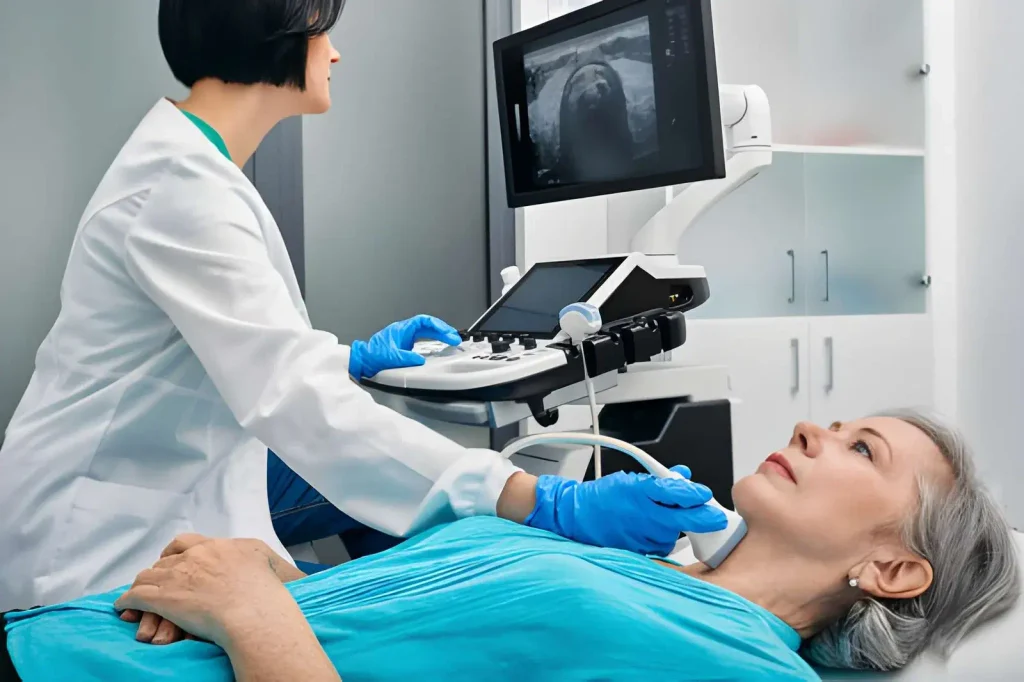
If results stay abnormal, your doctor can order antibody tests to find the cause. A thyroid ultrasound checks for nodules or an enlarged gland, and a radioactive iodine uptake scan helps identify the type of hyperthyroidism. An underactive thyroid can also raise LDL cholesterol, and our post on causes High Cholesterol covers the other factors behind high readings. These tests guide your next steps.
Treatment depends on the diagnosis. Hypothyroidism is usually treated with daily levothyroxine, and hyperthyroidism can be treated with antithyroid medicine, radioactive iodine, or surgery. Both conditions need regular blood tests to keep levels in range. Our article what Is Chronic Disease Management explains how ongoing care and lab monitoring work for lasting conditions like these. Regular follow up helps your provider keep your dose on track.
Frequently Asked Questions
Take The First Step
Expert aesthetic and medical care is just a click away. You deserve to look and feel your absolute best. We specialize in advanced treatments like Sculptra and Lipodissolve to help you achieve your desired results. Partner with our specialists to create a personalized care plan.