Normal Estrogen Levels by Age in Women: Chart and Ranges
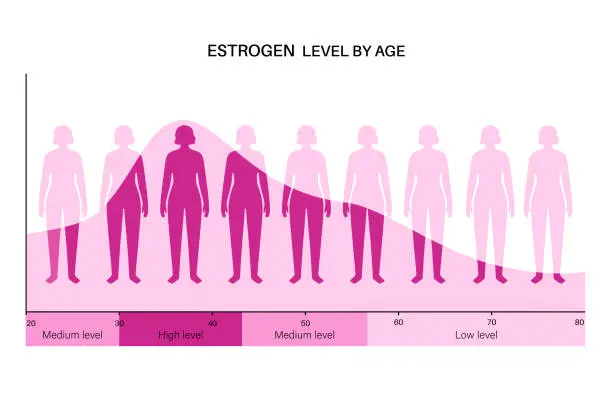
Normal estrogen levels in women change with age and with each phase of the menstrual cycle. Doctors usually measure estradiol, the main form of estrogen, in picograms per milliliter (pg/mL). Girls before puberty usually have less than 20 pg/mL. Women in their reproductive years range from about 30 to 120 pg/mL early in the cycle, 130 to 370 pg/mL around ovulation, and 70 to 250 pg/mL in the second half of the cycle. In perimenopause, levels rise and fall unevenly.
After menopause, estradiol usually drops below 30 pg/mL, and often below 10 pg/mL. Ranges vary by lab, so always compare your result with your own lab report.
What Is Estrogen and What Does It Do?
Estrogen is the main female sex hormone. The ovaries make most of it during the reproductive years, while fat tissue and the adrenal glands make smaller amounts. Estrogen controls puberty, the menstrual cycle, and pregnancy. It thickens the lining of the uterus each month, supports ovulation, and keeps vaginal tissue moist and healthy throughout a woman’s life. It also shapes body changes such as breast growth and fat distribution.
Estrogen also works far beyond the reproductive system. It helps keep bones strong, supports healthy cholesterol levels, protects blood vessels, and affects mood, sleep, memory, and skin. That is why falling estrogen during menopause can cause hot flashes, bone loss, vaginal dryness, and a rise in LDL cholesterol. Even small shifts in estrogen can change how a woman feels from week to week.
Men also make estrogen, but in much smaller amounts. In women, estrogen works together with progesterone, another hormone made by the ovaries. A healthy balance between the two keeps periods regular and supports fertility. When that balance shifts, women can notice irregular periods, mood swings, weight changes, poor sleep, and other symptoms of a hormone imbalance that are worth discussing with a provider.
Types of Estrogen in Women
The body makes three main types of estrogen, and each one plays a different role at different stages of life. The sections below explain what each type does and which one doctors usually test.
1. Estradiol (E2): The Main Estrogen Before Menopause
Estradiol, often written as E2, is the strongest and most important form of estrogen during the reproductive years. The ovaries make most of it, and its level changes throughout the menstrual cycle. Estradiol is the form most labs measure when a doctor orders an estrogen blood test. Most estrogen ranges you see on lab reports and charts refer to estradiol.
Estradiol controls ovulation, builds the uterine lining, and supports bone density and heart health. Its level peaks just before ovulation, then falls if pregnancy does not happen. As women approach menopause, the ovaries make less estradiol, and levels become unpredictable. After menopause, estradiol falls to very low levels and stays there for the rest of life, unless a woman uses hormone therapy.
2. Estrone (E1) and Estriol (E3)
Estrone, or E1, is a weaker form of estrogen. Before menopause, the ovaries and fat tissue both make it. After menopause, estrone becomes the main form of estrogen in the body, since fat tissue keeps making it after the ovaries slow down. Women with more body fat tend to have higher estrone levels after menopause, which can affect cancer risk.
Estriol, or E3, is the weakest form of estrogen and is made mostly by the placenta during pregnancy. Estriol levels rise steadily as pregnancy moves forward and are very low at other times. Doctors sometimes measure estriol as part of prenatal screening tests. Low dose estriol is also used in some vaginal creams to treat dryness after menopause.
Take The First Step
Your health and wellness goals deserve expert attention. Our board-certified team is here to listen, evaluate, and build a care plan tailored to your unique needs. Whether you’re exploring your options or ready to get started, the next step is simple.
Normal Estrogen Levels by Age
Estrogen is low in childhood, rises sharply at puberty, stays high through the reproductive years, swings during perimenopause, and falls after menopause. The sections below explain normal estradiol levels at each stage of a woman’s life.
1. Normal Estrogen Levels in Girls and Teens
Girls usually have estradiol levels below 20 pg/mL before puberty, and many labs report results below 10 pg/mL. Puberty often begins between ages 8 and 13, when the ovaries start making more estrogen. Breast development is usually the first sign. Estradiol levels then rise to about 10 to 200 pg/mL, depending on the stage of puberty and the time of the cycle.
Most girls get their first period about two to three years after breast development begins, often around age 12. Periods can be irregular for the first one to two years while hormone levels settle. Puberty that starts before age 8 or has not started by 13 should be checked by a provider. Our pediatric care in Cypress includes growth and puberty checks at routine visits.
2. Normal Estrogen Levels for Women Ages 18 to 40
Women in their reproductive years have the highest estrogen levels of their lives. Estradiol is about 30 to 120 pg/mL in the follicular phase, the first half of the cycle. It peaks at about 130 to 370 pg/mL around ovulation. In the luteal phase, the second half of the cycle, it settles at about 70 to 250 pg/mL before falling again just before a period.
Because estradiol changes so much during the cycle, one result only makes sense when you know which day it was drawn. Doctors often test on day 2 to 5 of the cycle, counting the first day of bleeding as day 1. Irregular or missed periods with abnormal levels can point to PCOS, and our guide on PCOS Symptoms and Treatment explains that condition.
3. Normal Estrogen Levels During Perimenopause
Perimenopause usually starts in a woman’s 40s and lasts about four to eight years before periods stop. In these years, estrogen does not fall in a straight line. Some months it drops very low, and other months it rises higher than normal. These swings cause irregular periods, hot flashes, night sweats, poor sleep, mood changes, and heavier bleeding in some women.
Because levels swing so widely, a single estrogen test cannot confirm perimenopause. Doctors usually rely on age, symptoms, and changes in the menstrual cycle instead. Our post on Perimenopause vs Menopause explains how to tell the two stages apart, and Perimenopause Symptoms and Treatment covers the most common signs and the treatment options that help ease them day to day.
4. Normal Estrogen Levels After Menopause
Menopause is official once a woman goes 12 months without a period, and the average age in the United States is 51. After menopause, the ovaries make very little estradiol. Normal postmenopausal estradiol is usually below 30 pg/mL, and many women fall below 10 pg/mL. Estrone made by fat tissue becomes the main form of estrogen in the body.
Low estrogen after menopause raises the risk of bone loss, osteoporosis, heart disease, and vaginal and urinary problems. Many women manage these changes with lifestyle steps, while others choose hormone therapy. Our guide on Hormone Replacement Therapy for Women explains how estrogen therapy works, its main benefits and risks, and who is a good candidate for treatment.
Normal Estrogen Levels Chart by Age and Cycle Phase
This chart shows common estradiol ranges for women at each stage of life and each phase of the menstrual cycle. Ranges vary slightly from lab to lab, so use this chart as a general guide. All numbers are in pg/mL.
| Life Stage or Cycle Phase | Normal Estradiol Range |
|---|---|
| Girls before puberty | Below 20 |
| Girls during puberty | About 10 to 200, depending on stage |
| Adult women, follicular phase (first half of cycle) | 30 to 120 |
| Adult women, ovulation (midcycle) | 130 to 370 |
| Adult women, luteal phase (second half of cycle) | 70 to 250 |
| Perimenopause | Varies widely, from very low to higher than normal |
| After menopause | Below 30, often below 10 |
| Pregnancy | Rises steadily, often above 10,000 by late pregnancy |
Estrogen Levels During Pregnancy and on Birth Control
Pregnancy causes the biggest rise in estrogen of a woman’s life. The placenta makes large amounts of estradiol and estriol, and levels climb through each trimester. Estradiol often rises above 10,000 pg/mL by the third trimester. These high levels help the uterus grow, support blood flow to the baby, and prepare the breasts for milk production after birth. Levels this high are normal only during pregnancy.
After delivery, estrogen drops quickly within a few days. This sudden fall can cause mood swings, night sweats, and vaginal dryness, especially while breastfeeding. Low estrogen during breastfeeding is normal and usually returns to the regular range once periods come back. Mood changes that last longer than two weeks after birth should be checked by a provider.
Birth control pills, patches, and rings contain a synthetic estrogen called ethinyl estradiol. They stop ovulation and keep your natural estradiol levels low and steady. Standard estradiol blood tests do not measure this synthetic hormone, so results while on birth control do not reflect your natural levels. Tell your provider about any hormone medicine before an estrogen test.
Signs of Low and High Estrogen in Women
Estrogen that is too low or too high can cause clear symptoms. The sections below explain the most common signs of each and what usually causes them.
1. Signs and Causes of Low Estrogen
Common signs of low estrogen include hot flashes, night sweats, irregular or missed periods, vaginal dryness, painful sex, poor sleep, mood swings, trouble focusing, and more frequent urinary tract infections. Over time, low estrogen also leads to bone loss and a higher risk of fractures. Many of these signs overlap with thyroid problems, so a TSH test is often checked at the same time.
Menopause is the most common cause of low estrogen. Other causes include premature ovarian insufficiency, which affects about 1 percent of women before age 40, surgical removal of the ovaries, very low body weight, intense exercise, and pituitary problems. Our post on Normal TSH Levels by Age explains how thyroid results can help rule out other causes.
2. Signs and Causes of High Estrogen
High estrogen, often in relation to low progesterone, can cause heavy or irregular periods, breast tenderness, bloating, mood swings, headaches, and weight gain around the hips and thighs. It can also play a role in fibroids and endometriosis. Over many years, high estrogen without enough progesterone raises the risk of endometrial cancer and breast cancer, so lasting symptoms deserve a checkup.
Common causes include extra body fat, which makes more estrone, PCOS, certain medicines, liver disease, and, rarely, ovarian tumors. Our guide on Signs of Hormonal Imbalance in Women explains how estrogen problems compare with other hormone issues. If extra weight plays a part, weight loss management in Cypress offers medically supervised plans that support healthier hormone levels.
How Estrogen Levels Are Tested in Cypress?
An estrogen test is a simple blood draw from a vein in your arm. Most labs measure estradiol, and results usually come back within a few days. Doctors often order follicle stimulating hormone, or FSH, at the same time. A high FSH with a low estradiol points to menopause or ovarian insufficiency, since the brain pushes harder when the ovaries slow down.
The timing of the test matters for women who still have periods. Many doctors test on day 2 to 5 of the cycle so results can be compared with standard ranges. Women over 45 with typical menopause symptoms usually do not need a hormone test to confirm menopause. Saliva and urine hormone tests sold online are less reliable than a blood test and are not recommended for diagnosis.
At Prime Healthcare of Cypress, we review your symptoms, cycle history, and lab results, and explain what your estrogen levels mean in plain language. Our women’s health services in Cypress include hormonal health evaluations and menopause care. Hormone labs can be added during annual physical exams in Cypress, and telemedicine in Cypress makes it easy to review your results from home.
Frequently Asked Questions
Take The First Step
Your health and wellness goals deserve expert attention. Our board-certified team is here to listen, evaluate, and build a care plan tailored to your unique needs. Whether you’re exploring your options or ready to get started, the next step is simple.