Cheek Fillers: What Are They Used For? Complete Guide
Cheek fillers are injectable treatments that add volume, lift, and definition to the cheeks. They restore lost fullness, sharpen facial contours, and reduce the appearance of sagging or flat midfaces. Most treatments use hyaluronic acid gel placed precisely beneath the skin to reshape and lift the cheek area. Results appear immediately and can last anywhere from 12 to 24 months depending on the product used and how your body processes it. This guide covers everything you need to know about cheek fillers, from how they work to what results look like and how they compare to other treatments.
What Are Cheek Fillers?
Cheek fillers are a type of dermal filler injected into the midface to restore or enhance cheek volume. Hyaluronic acid is the most common substance used. It is a naturally occurring compound already found in your skin and joints, which makes it well tolerated by most people. When injected into the cheek area, it binds to water molecules and creates a plumping effect that lifts the skin above it.
Calcium hydroxylapatite is another option, sold under the brand name Radiesse. It works similarly but stimulates some collagen production alongside the volumizing effect. For people looking at longer lasting results with a biostimulatory approach, Our blog on What Is Sculptra covers that option in detail, since Sculptra works differently by triggering your body’s own collagen over several months rather than adding immediate gel volume.
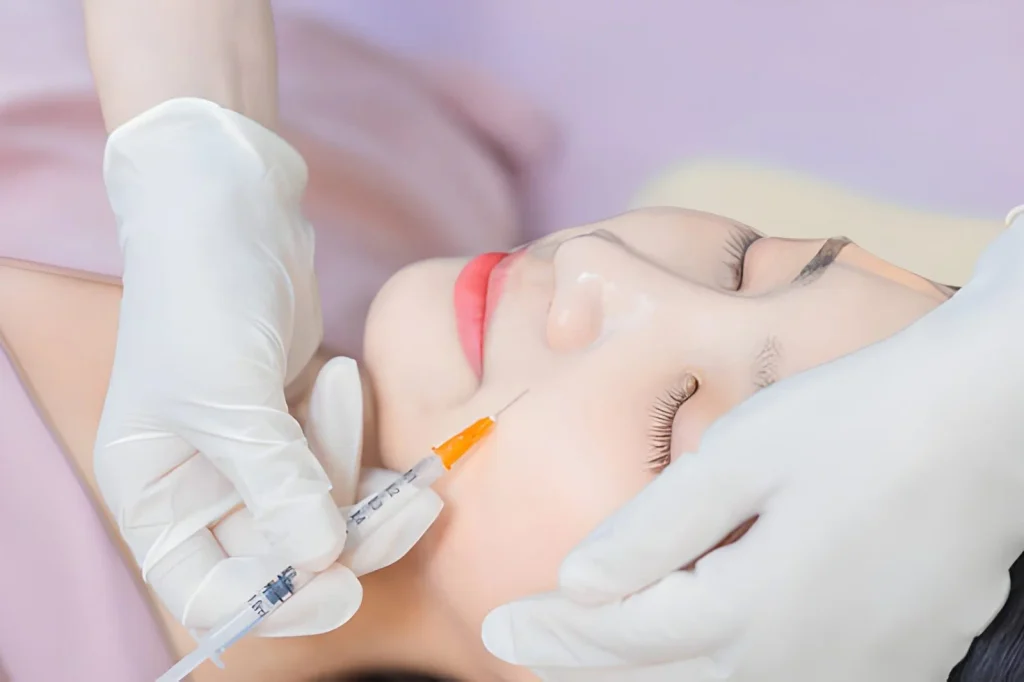
Cheek fillers are not the same as surgical implants. There is no cutting, no recovery room, and no general anesthesia. A trained injector places the product through a fine needle or cannula in a session that typically takes 30 to 45 minutes.
What Are Cheek Fillers Used For?
Cheek fillers serve several specific purposes, and the right one depends on what the patient actually needs.
Volume restoration is the most common use. As people age, fat pads in the face shift downward and shrink. The result is a flatter midface, more prominent nasolabial folds, and an overall tired appearance. Fillers placed in the submalar area or over the cheekbone directly replace that lost volume.
Contour and lift is the second major use. Even in younger patients who have not experienced significant volume loss, flat or undefined cheekbones can be reshaped. Filler placed along the zygomatic arch creates a higher, more structured look without altering the natural anatomy.
Indirect correction of other areas is something many patients do not expect. Lifting the midface with cheek filler can soften nasolabial folds, reduce under eye hollowing, and improve the overall balance of the lower face, all without touching those areas directly. If you are exploring what injectable treatments can do broadly, ouyr detailed blog on Dermal Fillers gives a solid foundation before narrowing down to cheek specific options.
Take The First Step
Expert aesthetic and medical care is just a click away. You deserve to look and feel your absolute best. We specialize in advanced treatments like Sculptra and Lipodissolve to help you achieve your desired results. Partner with our specialists to create a personalized care plan.
How Cheek Fillers Work?
The science behind cheek fillers is straightforward but requires precision in placement. Hyaluronic acid attracts and holds water molecules, which creates volume beneath the skin. When placed deep on the bone or in the submalar fat pad, it pushes the overlying tissue upward and outward. This creates the lift and contour patients are looking for.
Different products have different viscosities and particle sizes. Thicker, more cohesive gels are used for structural support deep on the bone. Softer gels are used closer to the surface for smoothness and blending. The injector chooses the product and depth based on the patient’s anatomy and goals.
Calcium hydroxylapatite fillers like Radiesse work similarly but also stimulate collagen production over time. This adds a biostimulatory component to the immediate volumizing effect.
Some patients explore collagen stimulating treatments that work gradually rather than providing instant volume. These options take longer to show results but offer a different approach for patients seeking subtle, progressive improvement.
Cheek Fillers vs. Sculptra: Understanding the Difference
Not every midface treatment works the same way, and the distinction matters before booking an appointment.
| Feature | Hyaluronic Acid Cheek Fillers | Sculptra |
|---|---|---|
| Mechanism | Immediate volume via gel | Collagen stimulation over time |
| Results visible | Same day | 2 to 3 months |
| Sessions needed | Usually 1 | Usually 2 to 3 |
| Duration | 12 to 24 months | Up to 2 years or more |
| Reversible | Yes, with hyaluronidase | No |
| Best for | Targeted lift and volume | Gradual, full face rejuvenation |
Hyaluronic acid fillers give instant correction. You see the change as soon as the injector finishes. Collagen stimulators require patience but can produce natural, long lasting results that develop slowly.
Patients who want to see what cheek enhancement looks like before committing often start with hyaluronic acid fillers because they are reversible. If the result is not what they wanted, an enzyme injection can dissolve the product within 24 to 48 hours.
How Long Do Cheek Fillers Last?
Duration depends on the product used, where it is placed, and how your body metabolizes it. Hyaluronic acid fillers in the cheeks generally last 12 to 18 months. Some denser formulas placed deep on the bone can last closer to 24 months. The cheeks metabolize filler more slowly than high movement areas like the lips because there is less muscle activity breaking down the product.
Factors that affect longevity include the patient’s age, skin condition, metabolism, and the volume injected. Patients who exercise heavily or have fast metabolisms may notice results fading sooner. Smoking and sun exposure also accelerate breakdown.
A touch up session at 12 months can extend the result without needing a full correction. Many patients find that subsequent treatments require less product because some structural improvement remains even after the filler itself has dissolved.
Getting Cheek Fillers in Cypress: What to Look For
If you are considering cheek enhancement in Cypress, the provider you choose matters as much as the product they use. Look for a medical professional with formal training in facial anatomy and injection techniques. Nurses, physician assistants, and doctors with aesthetic training are qualified. Avoid med spas where the injector’s credentials are unclear or where treatments are performed by non medical staff.
A good consultation includes a full facial assessment, not just a focus on the area you think needs work. Your cheeks do not exist in isolation. A qualified injector evaluates your entire face to determine how much volume you actually need and where it should go for a balanced result.
At Prime Healthcare of Cypress, cheek filer treatment in Cypress are performed after a thorough consultation and with a focus on natural looking results that fit the individual’s facial structure. The goal is enhancement, not transformation.
Ask about the specific product being used, how much will be injected, and what the expected longevity is. A provider who cannot or will not answer these questions clearly is not the right choice.
What to Expect During and After Treatment?
The treatment itself is straightforward when performed by a qualified injector. A topical numbing cream is applied 20 to 30 minutes before the session. Most hyaluronic acid fillers also contain lidocaine, which further reduces discomfort during injection. The injector marks the placement points, then uses either a needle or a blunt tipped cannula to deposit the filler at the correct depth. The entire session rarely exceeds 45 minutes.
Swelling, tenderness, and minor bruising are normal in the first 48 to 72 hours. Most patients return to their normal routine the same day, though strenuous activity, alcohol, and direct heat are best avoided for 24 hours. Full results settle in around two weeks once any initial swelling resolves.
Our blog on Dermal Filler Side Effects covers the full risk profile in detail, including the rare but serious complications like vascular occlusion that make provider selection important. Choosing an injector with medical training and emergency protocols in place is not optional, it is necessary.
Who Is a Good Candidate for Cheek Fillers?
Most healthy adults with realistic expectations are good candidates. Patients in their 30s and 40s commonly seek cheek fillers for volume loss and early midface descent. Younger patients in their 20s often seek structural enhancement rather than restoration. Both are valid uses, and the injection technique differs between the two goals.
Poor candidates include people who are pregnant or breastfeeding, those with active skin infections near the injection site, patients on blood thinners who cannot pause them, and anyone with a history of severe allergic reactions to filler components. A thorough consultation clears these factors before any treatment begins.
Patients with unrealistic expectations or those seeking dramatic, permanent changes are better suited for surgical options. Fillers provide enhancement and correction, not a complete facial overhaul.
Take The First Step
Expert aesthetic and medical care is just a click away. You deserve to look and feel your absolute best. We specialize in advanced treatments like Sculptra and Lipodissolve to help you achieve your desired results. Partner with our specialists to create a personalized care plan.